Nina csak akkor szólt semmit, amikor már három háztömbnyire elhajtottunk az iskolától.
Aztán feltett egy kérdést, amire nem voltam felkészülve.
„Anya, elhitték volna nekem, ha rosszul válaszolok néhány kérdésre?”
Beálltam egy bezárt bútorbolt parkolójába.
“Mi?”
„Ha nem kaptam volna ilyen magas pontszámot.”
A hangja halk volt.
„Talán ha kihagytam volna néhány kérdést, nem gondolná, hogy csaltam.”
Felé fordultam.
„Nina, nem tettél semmi rosszat azzal, hogy tudtad a válaszokat.”
A kezeit bámulta.
„De azt mondta, gyanús a pontszámom.”
„Azt mondta, magas az eredményed.”
– Azt mondta, túl magas.
Azt akartam mondani neki, hogy a felnőttek nem mindig értik, mire képesek a gyerekek.
De ez nem egészen igaz volt.
Az iskolájában a felnőttek tökéletesen megértették. Hónapok óta figyelték a munkáját.
Nina sosem volt az a fajta gyerek, aki befejez egy feladatlapot, majd kijelenti, hogy zseniális.
Ő volt az a gyerek, aki frusztráltan jött haza, mert tizenkilenc feladatot értett, de a huszadikat nem tudta megoldani.
A füzeteit áthúzott számításokkal töltötte meg. Izgatott lett, amikor rájött, hogy miért volt rossz egy válasz.
Tavaly nyáron, míg a többi gyerek délutánokat töltött az uszodában, Nina vitt magával egy jegyzetfüzetet, hogy úszás között dolgozhasson rajta.
Cukkoltam vele emiatt.
Azt mondta nekem, hogy jól érzi magát.
És én hittem neki.
Most valaki gyanússá változtatta ezt az örömöt.
– Nézz rám! – mondtam.
Meg is tette.
„A helyes válasz megszerzéséért nem kell bocsánatot kérni.”
Remegett az álla.
„Mi van, ha elveszik a díjamat?”
Meg akartam ígérni, hogy nem fogják.
Ehelyett azt mondtam: „Mielőtt bárki meghozná ezt a döntést, pontosan kiderítjük, mi történik.”
A nő bólintott.
Aztán azt suttogta: „Hazamehetünk?”
Felhívtam a munkahelyemet, és szóltam a főnökömnek, hogy családi vészhelyzetem van.
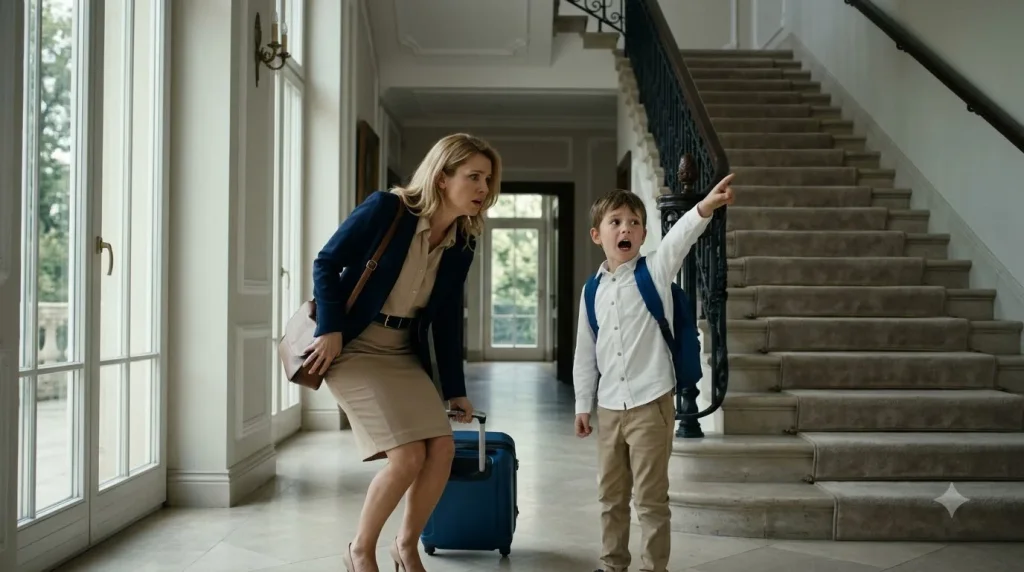
Amikor hazaértünk, Nina egyenesen felment az emeletre.
Nyolcéves fiunkat, Luke-ot, a konyhaasztalnál találtam anyámmal, aki érte jött az iskolából.
Két kartonpapírlapból készített egy táblát.
NINA AZ 1. HELYEN.
Egy görbe trófeát rajzolt alá.
„Kiakaszthatnánk ezt a bejárati ajtóra?” – kérdezte.
A lépcső felé néztem.
„Talán egyelőre tartsd itt, haver.”
Összeráncolta a homlokát.
“Miért?”
„Nehéz napja van a húgodnak.”
„Meghalt valaki?”
“Nem.”
„Akkor miért nehéz nap ez?”
Nem volt olyan válaszom, amit egy nyolcévesnek hallania kellett volna.
Azon az estén Nina alig nyúlt a vacsorához.
Amikor Luke megkérdezte, hogy még mindig megkapja-e a trófeáját, hátratolta a székét.
“Nem tudom.”
Felment az emeletre.
Luke rám nézett.
„Vesztett?”
„Nem, drágám.”
– Akkor miért nem tudja senki?
That question stayed with me.
The next morning, I met Nina’s math teacher, Ms. Bennett, before classes started.
She looked exhausted. There were two paper coffee cups on her desk, one empty and one untouched.
“Ruth, I’ve been trying to get permission to talk with you,” she said.
“Then tell me what you can.”
She closed the classroom door.
“The competition organizers contacted the school Sunday evening. They’ve found irregularities involving materials used by some students preparing for the team challenge.”
“What kind of irregularities?”
“Certain solutions in the team round closely match a set of materials that students weren’t authorized to use.”
“Did Nina use them?”
“I don’t know who had access to everything yet.”
I appreciated that she didn’t pretend otherwise.
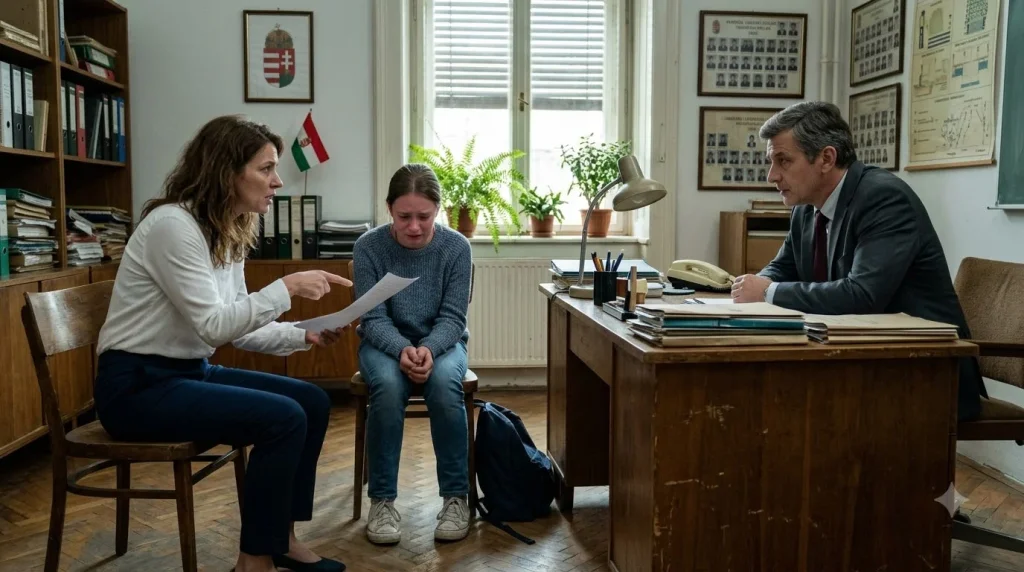
“Then why did Mr. Collins ask her to confess?”
Ms. Bennett’s jaw tightened.
“I didn’t know he’d prepared a statement.”
I showed her the photograph I’d taken of the paper before leaving his office.
She read it.
Her expression changed.
“He used the words ‘individual championship’?”
“Yes.”
“Ruth, the individual competition and the team challenge are scored separately.”
“Explain that to me.”
“The individual round was a supervised written exam. Every student worked independently. Nina’s score came from that exam.”
“And the suspicious answers?”
“They’re from the team challenge.”
I sat back.
“Then Nina’s individual award isn’t being investigated?”
“Not according to the initial notice I received.”
“Does the principal know that?”
“Yes.”
“Then why is he doing this?”
Ms. Bennett looked toward the closed door.
“Our school has never won a state title before. Mr. Collins has spent months promoting the math program. The school board is supposed to recognize the team next week.”
“So?”
“So he’s terrified that if the team is disqualified, everyone will question the individual result too.”
I rubbed my forehead.
“That doesn’t make Nina responsible.”
“No,” she said quietly. “It doesn’t.”
I asked whether she would help us establish what Nina had actually done.
She nodded.
“I can help gather her work and request the proper review. But I won’t pretend the team issue isn’t real.”
“That’s not what I’m asking.”
“Good.”
She pulled a notebook toward her.
“Then let’s start with the facts.”
For nearly forty minutes, we went through Nina’s preparation schedule.
Practice exams. Math club meetings. Independent assignments. Weekend problem sets.
Ms. Bennett had kept records of many of them.
Nina’s scores hadn’t suddenly jumped the week of the championship. They’d been rising steadily since September.
Popular Posts
→- 1
- 2
- 3
- 4




Recently Viewed
Stories you read recently will appear here.